
Podiatry Compounding
Compounded Treatments for Plantar Warts
Rock Ridge Pharmacy prepares customized topical liquids and gels for plantar warts with ingredients, strengths, and dosage forms tailored to the treatment plan established by the podiatrist.
Plantar Warts & Customized Treatment Options
Plantar warts are growths that develop on the soles of the feet and are caused by certain types of human papillomavirus (HPV). They may appear as rough, thickened areas of skin and can become uncomfortable when located on weight-bearing areas of the foot.
Plantar warts can be difficult to manage because pressure from standing and walking may push the wart inward beneath layers of hardened skin. Some warts may also persist or recur despite standard treatment approaches.
When commercially available options do not meet a patient's needs, a podiatrist may prescribe a customized compounded topical liquid or gel. Rock Ridge Pharmacy can prepare patient-specific formulations using prescribed ingredients, strengths, and dosage forms selected for the patient's treatment plan.
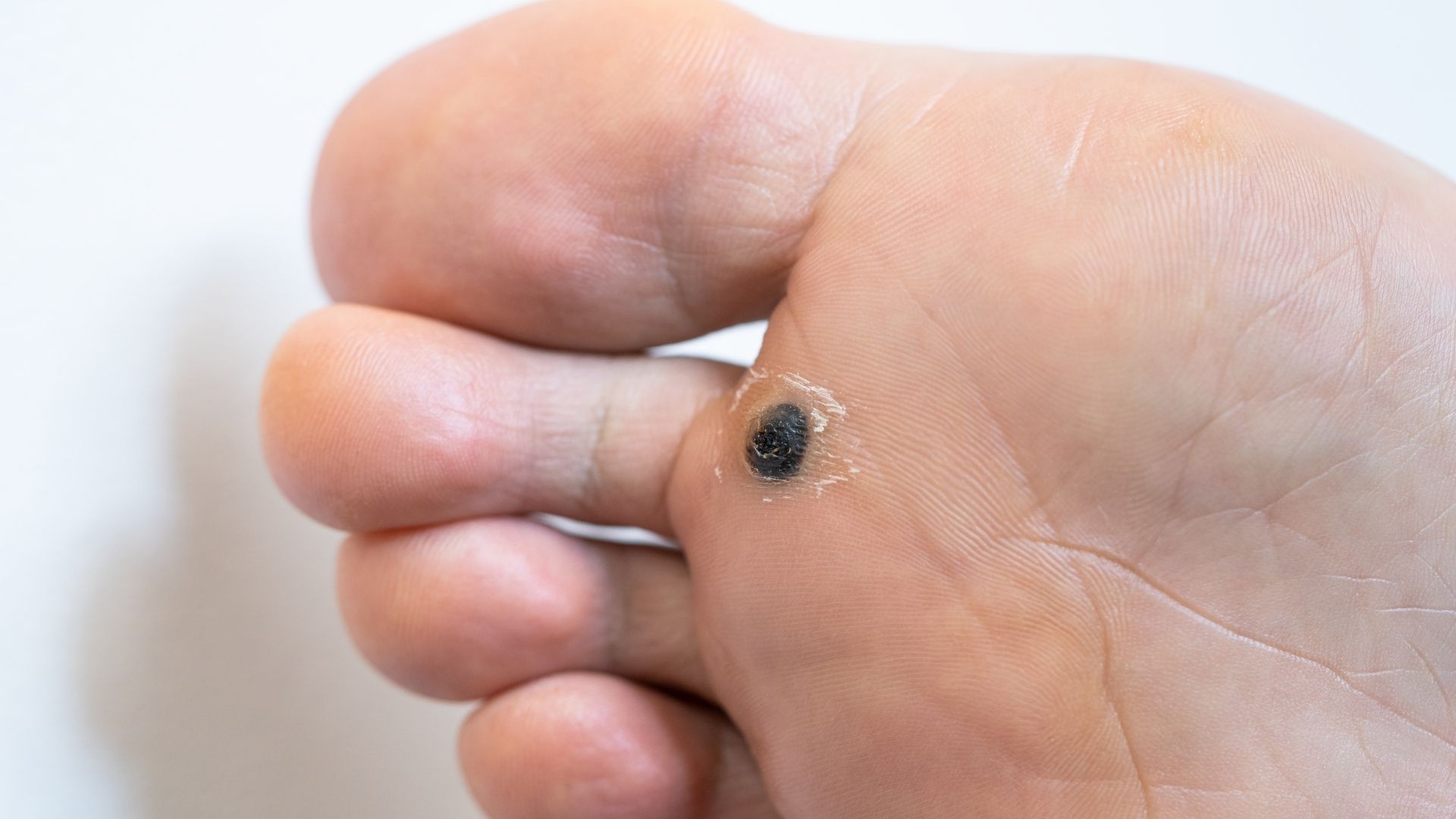
Customized Podiatry Compounding
Benefits of Customized Plantar Wart Preparations
Compounding gives podiatrists greater flexibility when a patient with plantar warts needs a topical preparation that differs from commercially available options. Rock Ridge Pharmacy can prepare patient-specific ingredients, strengths, and topical dosage forms according to the podiatrist's treatment plan.
Custom Ingredient Options
Compounding allows a podiatrist to select specific ingredients or ingredient combinations when an individualized topical approach is appropriate for a patient's plantar wart treatment plan.
Customized Strengths
Compounding allows plantar wart medications to be prepared in the specific strengths ordered by the podiatrist based on the selected formulation and individualized treatment approach.
Topical Liquids & Gels
Rock Ridge Pharmacy can prepare prescribed plantar wart formulations as topical liquids or topical gels, allowing the podiatrist to select a dosage form suited to the formulation and intended application.
Localized Wart Application
These preparations are intended for localized topical application to the plantar wart or prescribed treatment area, according to the application instructions provided for the specific formulation.
Podiatrist-Directed Treatment
The podiatrist can determine the ingredients, strength, dosage form, application method, and treatment schedule appropriate for the patient's plantar wart and overall treatment plan.
Patient-Specific Preparation
Rock Ridge Pharmacy prepares each compounded plantar wart medication for the individual patient, following the formulation and treatment directions provided by the podiatrist.
When Might a Podiatrist Consider Compounding?
A podiatrist may consider a compounded plantar wart preparation when a patient needs a specific ingredient, customized strength, combination, or topical dosage form that is not readily available as a standard manufactured product.
Treatment decisions for plantar warts are individualized. The podiatrist determines whether a customized formulation is appropriate based on the location, characteristics, treatment history, and needs of the patient.
Compounded Plantar Wart Formulations
Rock Ridge Pharmacy can prepare customized plantar wart medications in the ingredients, strengths, and topical dosage forms ordered by the podiatrist.
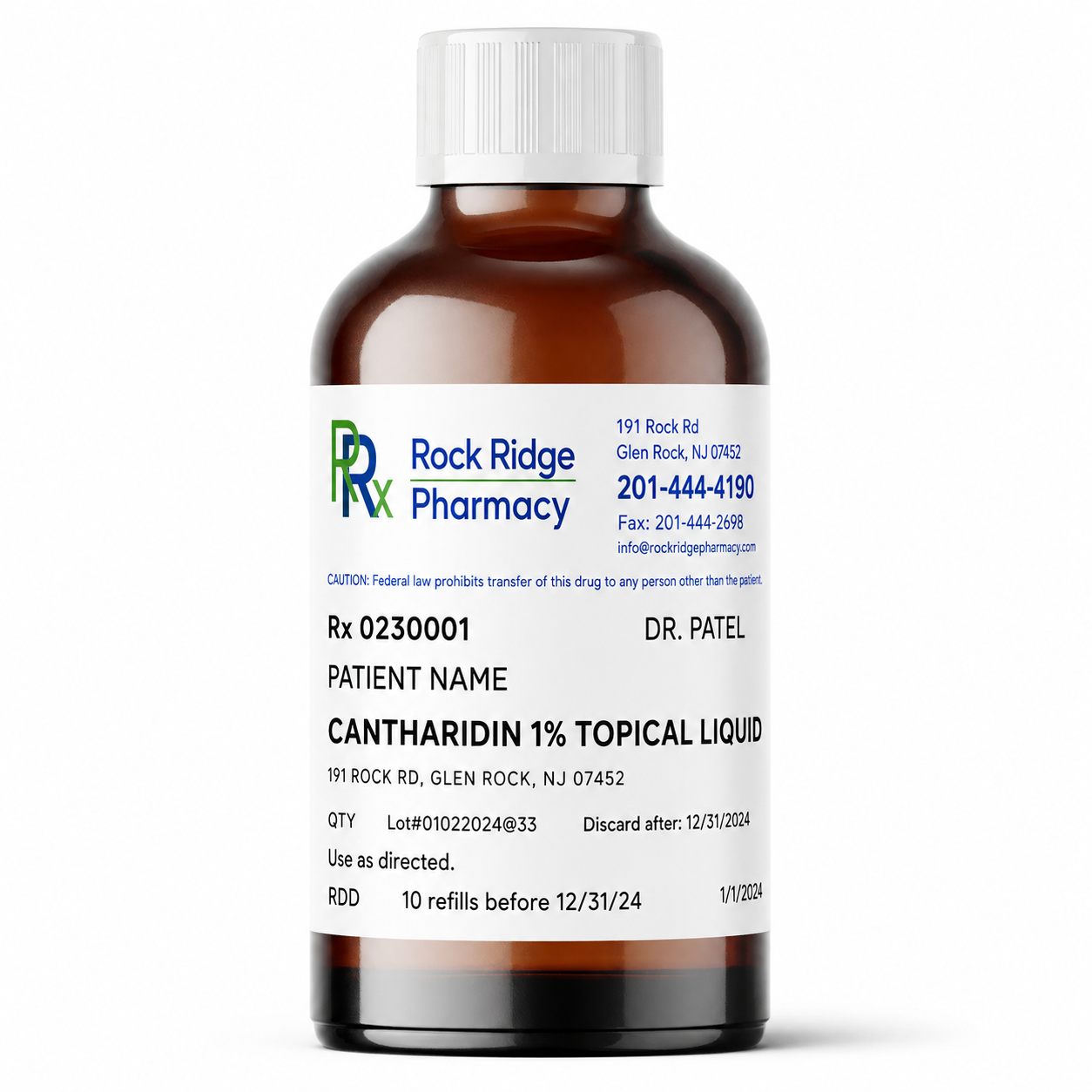
Cantharidin 1% Topical Liquid
A compounded topical liquid containing cantharidin that may be prescribed by a podiatrist for carefully directed application to a plantar wart.
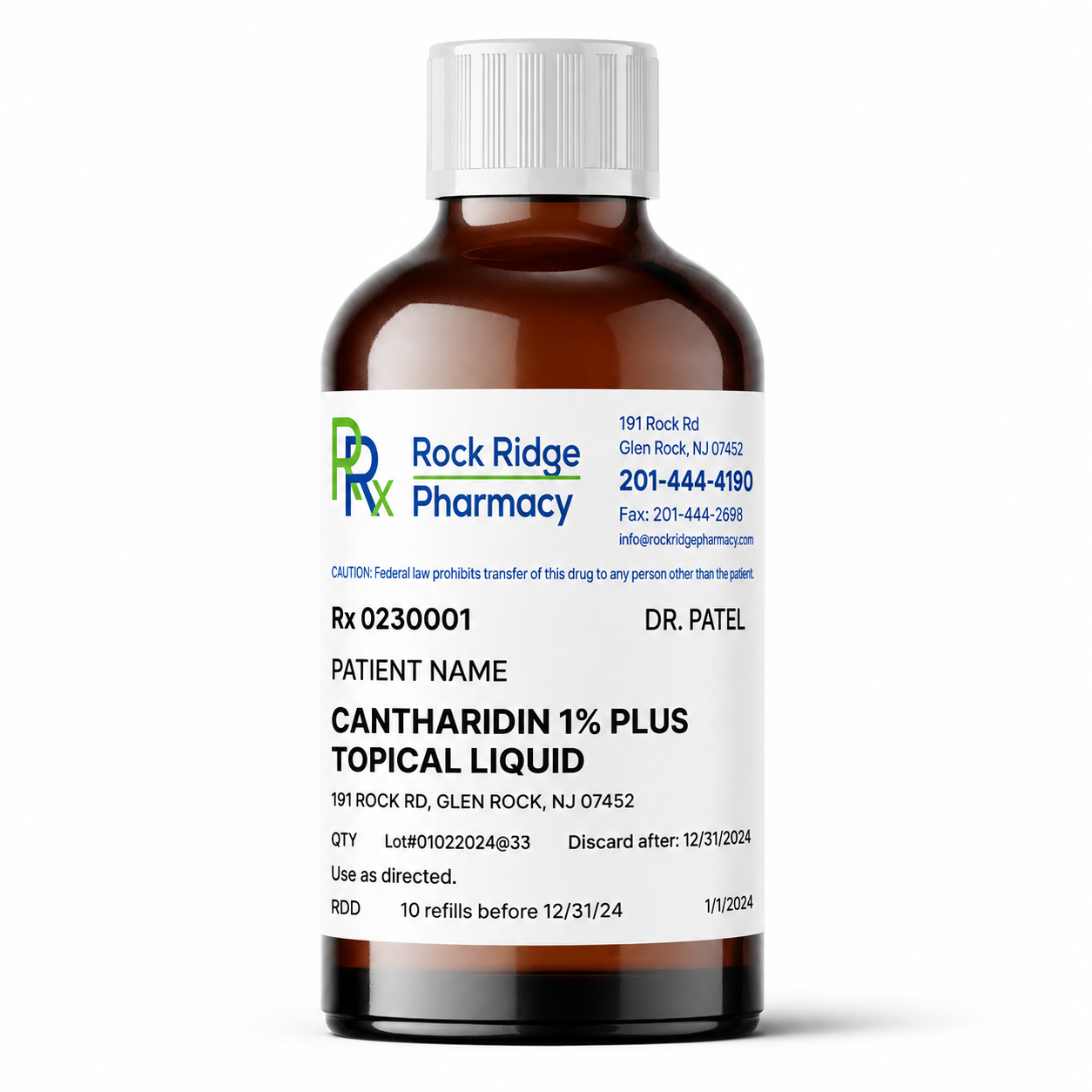
Cantharidin 1% Plus Topical Liquid
A customized topical liquid formulation that may be selected when the podiatrist determines that a cantharidin-based compounded preparation is appropriate for the plantar wart treatment plan.
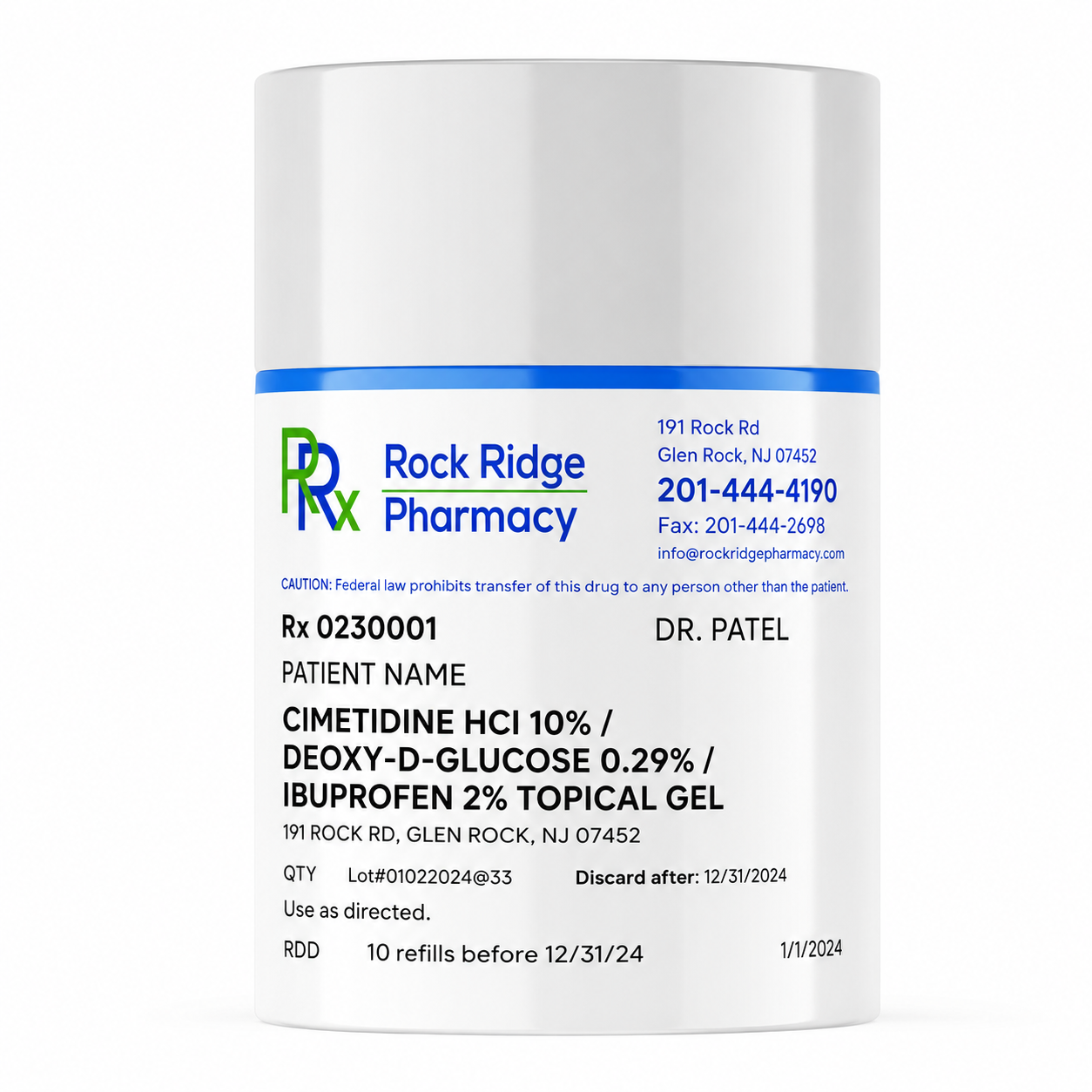
Cimetidine HCl 10% / Deoxy-D-Glucose 0.29% / Ibuprofen 2% Topical Gel
A multi-ingredient compounded topical gel that may be prescribed when a podiatrist wants a customized formulation and gel dosage form for localized plantar wart treatment.
Formulation Flexibility
Customized Dosage Forms for Plantar Warts
Compounding allows the podiatrist to specify not only the active ingredients and strengths, but also the dosage form used for localized plantar wart treatment. Rock Ridge Pharmacy prepares the form ordered by the podiatrist.
Topical Liquids
A thin liquid preparation designed for precise, localized application to the plantar wart. Liquid formulations such as cantharidin preparations may be selected when controlled placement on the treatment area is needed.
Cantharidin-Based Liquids
Compounded preparations such as Cantharidin 1% Topical Liquid and Cantharidin 1% Plus Topical Liquid provide a fluid dosage form for targeted application according to the podiatrist's treatment instructions.
Topical Gels
A thicker dosage form that can provide more controlled placement on the plantar wart treatment area and can accommodate prescribed multi-ingredient formulations such as Cimetidine HCl 10% / Deoxy-D-Glucose 0.29% / Ibuprofen 2% Topical Gel.
Why Dosage-Form Flexibility Matters
The location, size, thickness, and treatment history of a plantar wart can influence how a topical preparation is applied. Compounding gives the podiatrist the ability to request a liquid or gel together with the desired ingredients and strength, allowing Rock Ridge Pharmacy to prepare a patient-specific formulation suited to the treatment plan.
Treatment Expectations & Cost Considerations
Response May Take Time
Plantar warts may require more than one treatment or follow-up visit, particularly when they are thick, persistent, located on weight-bearing areas, or have not responded to previous treatment.
Follow Application Directions
Use the compounded preparation exactly as directed by the podiatrist. Application instructions can differ between topical liquids and gels, and some preparations require particularly careful placement on the wart.
Podiatrist Follow-Up
Follow-up allows the podiatrist to evaluate the wart, monitor the treatment area, and determine whether the formulation, application schedule, or overall treatment plan should remain the same or be adjusted.
Customized Pricing
Cost depends on the ingredients, strengths, dosage form, quantity, and complexity of the compounded preparation. Pricing can vary between topical liquids, gels, and other patient-specific formulations.
Call (201) 444-4190 for pricingYour podiatrist determines the appropriate plantar wart treatment plan, application schedule, and follow-up needs. Rock Ridge Pharmacy prepares the compounded medication according to those directions and can answer questions about the formulation, storage, and pharmacy-provided instructions.
Storage & Safety
Storing Your Compounded Preparation
- Follow the storage directions on your prescription label.
- Keep the medication in its original, tightly closed container.
- Protect it from excessive heat, moisture, and direct sunlight unless otherwise directed.
- Do not refrigerate or freeze unless specifically instructed by Rock Ridge Pharmacy.
- Follow the pharmacy-provided beyond-use date.
Using Your Medication Safely
Possible reactions depend on the ingredients, strengths, dosage form, and application area. Plantar wart preparations may cause localized redness, tenderness, irritation, burning, blistering, or changes to the treated skin, depending on the formulation used.
Apply the preparation only to the treatment area as directed and contact your podiatrist, healthcare provider, or pharmacist if you experience an unexpected, severe, or persistent reaction.
Your Instructions Are Formulation-Specific
Compounded plantar wart preparations can differ in active ingredients, concentrations, bases, and dosage forms. Rock Ridge Pharmacy provides storage, handling, beyond-use date, and pharmacy-use instructions specific to the formulation prepared for you.
When to Follow Up With Your Podiatrist
Follow the schedule recommended by your podiatrist so they can evaluate the plantar wart and determine whether the compounded formulation, dosage form, application schedule, or overall treatment plan should be continued or adjusted.
Contact your podiatrist sooner if the treated area is becoming increasingly painful, showing significant irritation or blistering, spreading, changing unexpectedly, or not responding as expected.
If you have questions about the compounded preparation itself, including storage, beyond-use date, or pharmacy instructions, contact Rock Ridge Pharmacy at (201) 444-4190.
FAQs About Compounded Plantar Wart Treatments
What can Rock Ridge Pharmacy compound for plantar warts?
Rock Ridge Pharmacy can prepare patient-specific topical liquids and topical gels for plantar warts. Examples include Cantharidin 1% Topical Liquid, Cantharidin 1% Plus Topical Liquid, and Cimetidine HCl 10% / Deoxy-D-Glucose 0.29% / Ibuprofen 2% Topical Gel.
What are plantar warts?
Plantar warts are growths that develop on the soles of the feet and are caused by certain types of human papillomavirus (HPV). They may appear as rough or thickened areas of skin and can become uncomfortable when they develop on weight-bearing areas.
Why can plantar warts be difficult to treat?
Plantar warts can be challenging because pressure from standing and walking may push the wart inward beneath layers of hardened skin. Some plantar warts may also be persistent, recur, or require more than one treatment approach before improvement is seen.
Why would a podiatrist consider a compounded plantar wart treatment?
Compounding may be considered when a podiatrist wants a specific ingredient, strength, combination, or topical dosage form for an individualized plantar wart treatment plan.
What is cantharidin?
Cantharidin is a topical ingredient used in the treatment of certain warts. When applied to the treatment area, it can cause a localized blistering response that affects the treated wart tissue. Application and follow-up should be performed according to the podiatrist's specific treatment instructions.
What is Cantharidin 1% Topical Liquid?
Cantharidin 1% Topical Liquid is a compounded liquid preparation that may be selected by a podiatrist for localized treatment of a plantar wart. The liquid dosage form allows careful placement on the treatment area according to the prescribed application instructions.
What is Cantharidin 1% Plus Topical Liquid?
Cantharidin 1% Plus Topical Liquid is a cantharidin-based compounded preparation that may be selected when the podiatrist determines that this formulation is appropriate for the patient's plantar wart treatment plan.
What is Cimetidine HCl 10% / Deoxy-D-Glucose 0.29% / Ibuprofen 2% Topical Gel?
This is a multi-ingredient compounded topical gel that may be prescribed by a podiatrist as part of an individualized plantar wart treatment plan. The gel dosage form provides controlled localized placement of the prescribed ingredients on the treatment area.
What is the difference between a topical liquid and a topical gel?
A topical liquid has a thin consistency that allows precise application to the treatment area. A topical gel has a thicker consistency that can remain more localized after application and can accommodate prescribed multi-ingredient formulations. The podiatrist determines which dosage form is appropriate.
How should a compounded plantar wart medication be applied?
Application depends on the specific formulation. Patients should follow the instructions provided for their preparation, including where to apply it, how much to use, how often to apply it, and whether any additional care of the treatment area is needed. Do not apply the medication more frequently or over a larger area than directed.
What should I expect after a plantar wart treatment?
The response depends on the formulation and individual treatment plan. Some preparations may cause localized changes such as redness, tenderness, irritation, or blistering at the treated area. Plantar warts may require repeated treatment or follow-up before the podiatrist determines that treatment is complete.
Does a plantar wart disappear after one treatment?
Not necessarily. Treatment response varies according to factors such as the size, thickness, location, duration, and previous treatment of the plantar wart. Some warts may require additional applications, follow-up visits, or adjustments to the treatment approach.
Can plantar warts come back after treatment?
Plantar warts can recur in some patients. Your podiatrist can evaluate the treatment area during follow-up and provide guidance if a wart returns or additional plantar warts develop.
What safety precautions should I follow with compounded plantar wart preparations?
Follow the application and handling instructions provided for your specific formulation. Avoid applying the preparation to unintended areas of skin, and contact your podiatrist, healthcare provider, or pharmacist if you experience an unexpected, severe, or persistent reaction.
When should I follow up with my podiatrist?
Follow the schedule recommended by your podiatrist so the treatment area can be evaluated. Contact the podiatrist sooner if the area becomes increasingly painful, significantly irritated, changes unexpectedly, spreads, or does not respond as expected.
Can my podiatrist adjust my compounded plantar wart formulation?
Yes. Based on follow-up and treatment response, the podiatrist may determine whether the formulation, dosage form, application schedule, or overall treatment plan should remain the same or be adjusted.
Do I need a prescription for Rock Ridge Pharmacy to compound a plantar wart medication?
Yes. A valid patient-specific prescription from a licensed healthcare provider is required. The prescription determines the formulation, strength, dosage form, and directions for use.
Can Rock Ridge Pharmacy work directly with my podiatrist?
Yes. Rock Ridge Pharmacy can communicate with your podiatrist or other licensed prescriber regarding the compounded formulation and patient-specific prescription needs. Prescribers may send prescriptions electronically, by fax, or contact the pharmacy directly.
How much does a compounded plantar wart prescription cost?
Pricing depends on the ingredients, strengths, dosage form, quantity, and complexity of the compounded formulation. Call Rock Ridge Pharmacy at (201) 444-4190 for pricing based on your specific formulation.
How quickly can Rock Ridge Pharmacy prepare a compounded plantar wart medication?
Preparation time depends on the formulation and ingredient availability. Rock Ridge Pharmacy can provide a more specific preparation timeframe after receiving the prescription.