
Podiatry Compounding
Compounded Treatments for Plantar Fasciitis & Heel Pain
Rock Ridge Pharmacy prepares customized topical gels and transdermal preparations with ingredient combinations, strengths, and dosage forms tailored to localized heel and plantar fascia discomfort and the treatment plan established by the podiatrist.
Plantar Fasciitis & Customized Treatment Options
Plantar fasciitis is a common cause of heel pain that involves irritation of the plantar fascia, the thick band of tissue that runs along the bottom of the foot and helps support the arch.
Heel and plantar fascia discomfort may be associated with repetitive stress, prolonged standing, increased activity, footwear, foot mechanics, or other factors that place added strain on the tissues of the heel and arch.
When commercially available options do not meet a patient's needs, a podiatrist may prescribe a customized compounded topical gel or transdermal preparation. Rock Ridge Pharmacy can prepare patient-specific formulations using prescribed ingredient combinations, strengths, and dosage forms for localized application to the heel or plantar fascia area.

Customized Podiatry Compounding
Benefits of Customized Plantar Fasciitis & Heel Pain Preparations
Compounding gives podiatrists greater flexibility when a patient needs a preparation for localized heel or plantar fascia discomfort that differs from commercially available options. Rock Ridge Pharmacy can prepare patient-specific combinations, strengths, and topical dosage forms according to the prescriber's directions.
Custom Ingredient Combinations
A prescriber can request multiple ingredients in one compounded preparation when an individualized combination is appropriate for addressing localized heel or plantar fascia discomfort as part of the patient's treatment plan.
Customized Strengths
Compounding allows the medication to be prepared in the specific strengths ordered by the podiatrist rather than limiting treatment to commercially manufactured strengths.
Topical & Transdermal Preparations
Rock Ridge Pharmacy can prepare prescribed formulations as topical gels or transdermal gels depending on the formulation, ingredients, and application needs established by the prescriber.
Localized Heel Application
These preparations are designed for localized application to the heel, arch, or prescribed plantar fascia area, according to the application directions provided by the prescriber.
Podiatrist-Directed Formulations
Each formulation can be customized according to the podiatrist's treatment plan, allowing the prescriber to determine the ingredients, strengths, dosage form, and application directions appropriate for the patient.
Patient-Specific Preparation
Rock Ridge Pharmacy prepares each compounded medication for the individual patient's localized treatment needs, following the formulation and directions provided by the prescriber.
Where Might Compounding Fit Into a Treatment Plan?
A podiatrist may consider a compounded preparation when a patient with plantar fasciitis or localized heel pain requires a specific combination of ingredients, customized strength, or topical or transdermal dosage form that is not readily available as a standard manufactured product.
Compounded preparations may be incorporated alongside other components of a podiatric treatment plan, such as activity modification, stretching, supportive footwear, orthotics, or other therapies recommended by the patient's healthcare provider.
Compounded Plantar Fasciitis & Heel Pain Formulations
Rock Ridge Pharmacy can prepare customized topical and transdermal formulations in the ingredients, strengths, and dosage forms ordered by the prescriber for localized heel and plantar fascia discomfort.
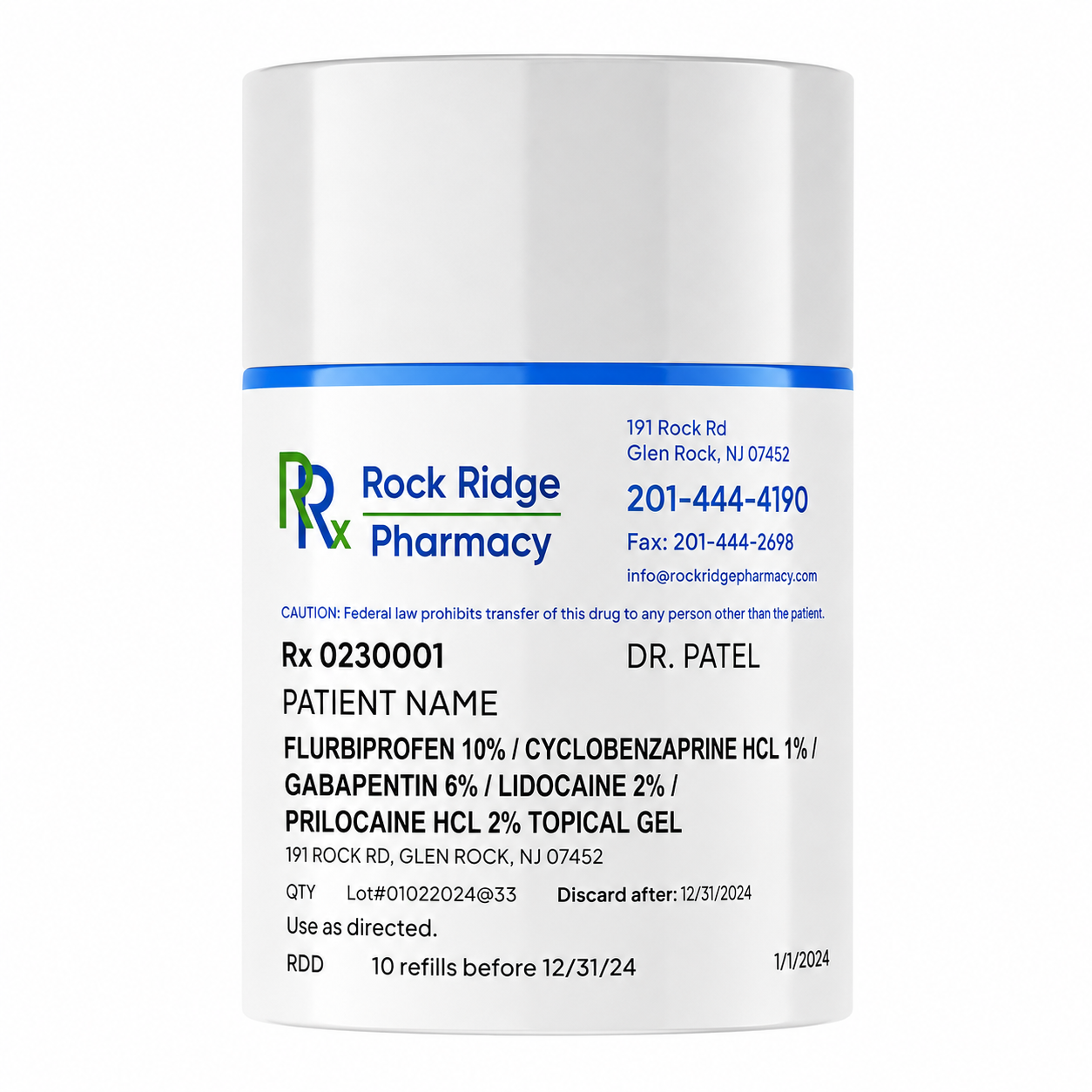
Flurbiprofen 10% / Cyclobenzaprine HCl 1% / Gabapentin 6% / Lidocaine 2% / Prilocaine HCl 2% Topical Gel
A multi-ingredient topical gel that may be prescribed for localized application to the heel, arch, or plantar fascia area as part of an individualized pain management plan.
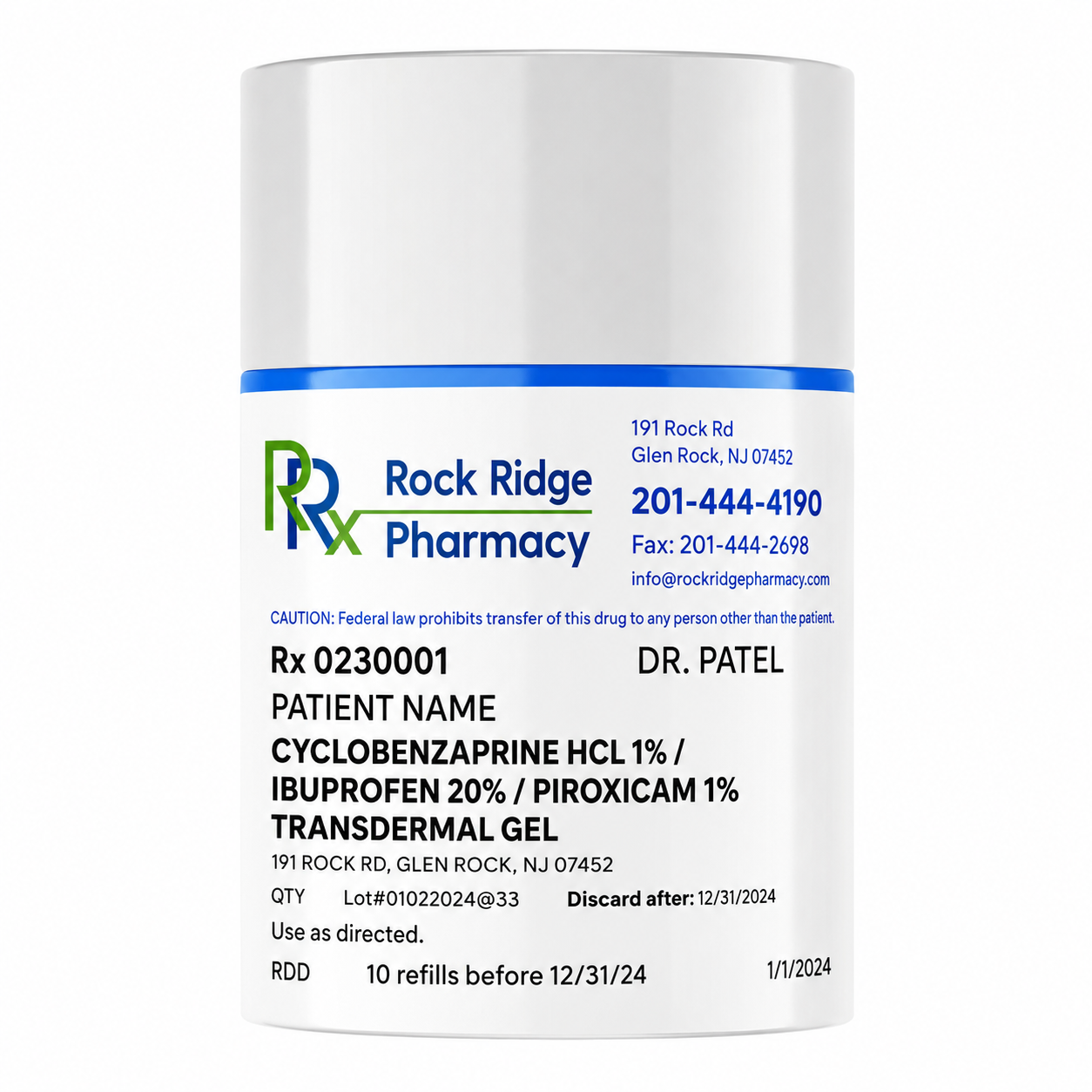
Cyclobenzaprine HCl 1% / Ibuprofen 20% / Piroxicam 1% Transdermal Gel
A compounded transdermal gel combining prescribed ingredients for application to a localized area of heel or plantar fascia discomfort according to the prescriber's directions.
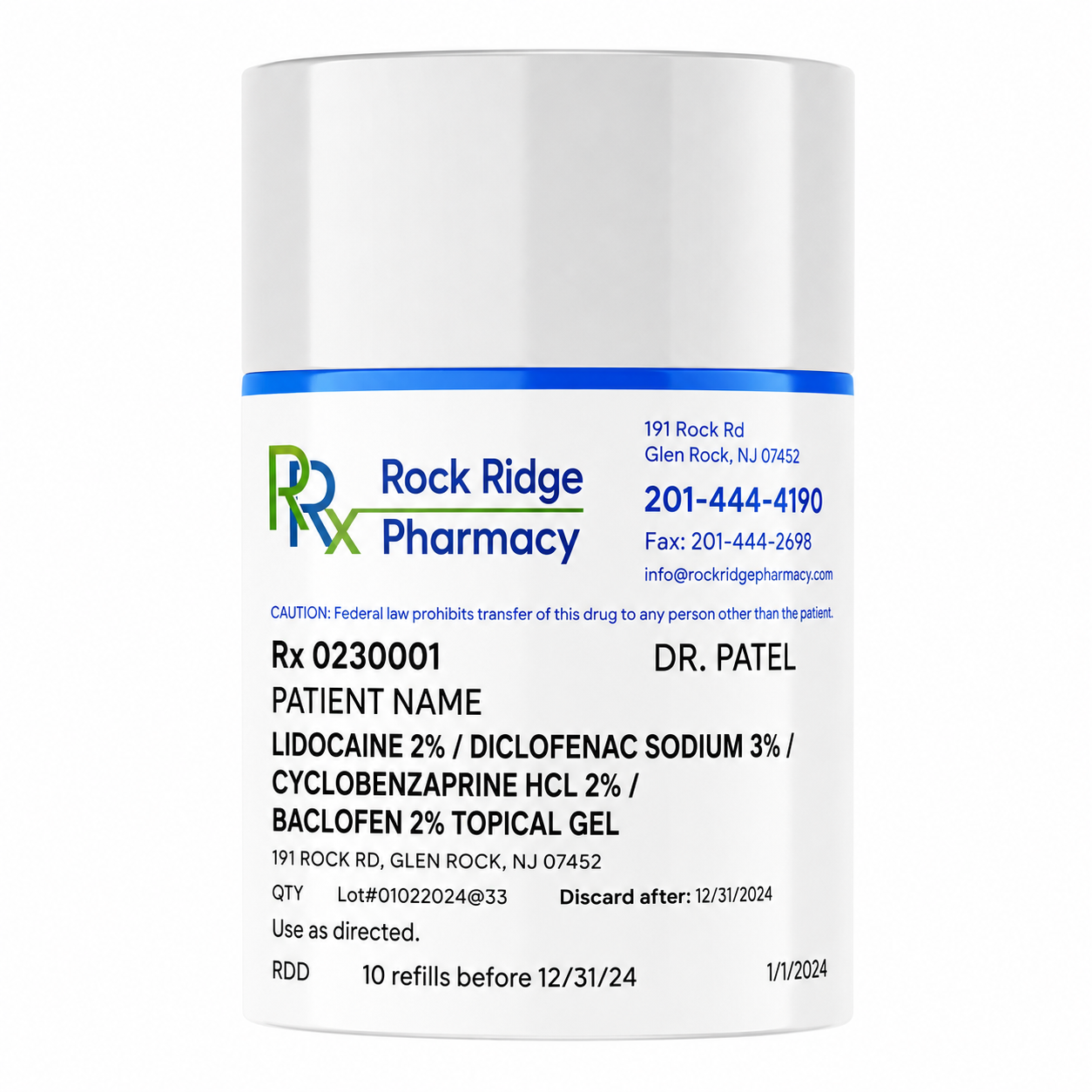
Lidocaine 2% / Diclofenac Sodium 3% / Cyclobenzaprine HCl 2% / Baclofen 2% Topical Gel
A customized topical gel containing multiple prescribed ingredients that may be incorporated into a treatment plan for localized heel and plantar fascia pain.
Formulation Flexibility
Customized Dosage Forms for Plantar Fasciitis & Heel Pain
Compounding allows the podiatrist to specify not only the active ingredients and strengths, but also the dosage form used for localized application. Rock Ridge Pharmacy prepares the form ordered by the prescriber for the patient's treatment plan.
Topical Gels
A gel dosage form intended for localized application to the heel, arch, or plantar fascia area. Its consistency can help keep the prescribed preparation concentrated on the treatment area as directed.
Transdermal Gels
A compounded gel prepared in a transdermal base that may be prescribed for application to a specific area of heel or plantar fascia discomfort, depending on the formulation and treatment plan.
Customized Topical Preparations
Compounded topical preparations can accommodate multiple prescribed ingredients and customized strengths in one formulation for controlled placement on the localized treatment area.
Why Dosage-Form Flexibility Matters
A commercial product may offer only one standard formulation. Compounding gives the prescriber the ability to request a specific topical or transdermal dosage form together with the desired ingredient combination and strength, allowing Rock Ridge Pharmacy to prepare a patient-specific formulation for localized heel and plantar fascia application.
Treatment Expectations & Cost Considerations
Relief May Vary
How quickly a patient notices improvement can vary depending on the severity and cause of the heel or plantar fascia discomfort, the prescribed formulation, and the overall treatment plan. Some patients may notice changes sooner than others.
Consistent Application Matters
Apply the compounded preparation to the localized treatment area according to your prescriber's directions. Using the medication inconsistently or differently than directed may affect the treatment response.
Podiatrist Follow-Up
Follow-up allows the prescriber to evaluate heel and plantar fascia symptoms and determine whether the formulation, dosage form, application instructions, or overall treatment plan should remain the same or be adjusted.
Customized Pricing
Cost depends on the ingredients, strengths, topical or transdermal dosage form, quantity, and complexity of the compounded formulation. Pricing can vary from one patient-specific preparation to another.
Call (201) 444-4190 for pricingA compounded topical preparation may be only one component of a podiatric treatment plan. Your podiatrist may also recommend stretching, activity modification, supportive footwear, orthotics, physical therapy, or other measures based on the cause and severity of your heel or plantar fascia discomfort.
Storage & Safety
Storing Your Compounded Preparation
- Follow the storage directions on your prescription label.
- Keep the medication in its original, tightly closed container.
- Protect it from excessive heat, moisture, and direct sunlight unless otherwise directed.
- Do not refrigerate or freeze unless specifically instructed by Rock Ridge Pharmacy.
- Follow the pharmacy-provided beyond-use date.
Using Your Medication Safely
Possible reactions depend on the ingredients, strengths, dosage form, and application area. Topical or transdermal preparations used for heel and plantar fascia discomfort may cause localized redness, dryness, itching, burning, irritation, or sensitivity in some patients.
Apply the preparation only to the localized treatment area directed by your prescriber and avoid unintended contact with the eyes, mouth, or other sensitive areas. Contact your podiatrist, healthcare provider, or pharmacist if you experience an unexpected, severe, or persistent reaction.
Your Instructions Are Formulation-Specific
Compounded preparations for plantar fasciitis and heel pain can differ in active ingredients, concentrations, bases, and dosage forms. Rock Ridge Pharmacy provides storage, handling, beyond-use date, application, and pharmacy-use instructions specific to the formulation prepared for you.
When to Follow Up With Your Podiatrist
Follow the schedule recommended by your podiatrist so they can evaluate your heel and plantar fascia symptoms and determine whether the compounded formulation, dosage form, application instructions, or treatment plan should be continued or adjusted.
Contact your podiatrist sooner if the heel or plantar fascia discomfort is worsening, becoming more frequent, affecting walking or daily activity, accompanied by swelling or other new symptoms, or not improving as expected.
If you have questions about the compounded preparation itself, including storage, beyond-use date, application, or pharmacy instructions, contact Rock Ridge Pharmacy at (201) 444-4190.
FAQs About Compounded Plantar Fasciitis & Heel Pain Treatments
What can Rock Ridge Pharmacy compound for plantar fasciitis and heel pain?
Rock Ridge Pharmacy can prepare patient-specific topical gels and transdermal gels for localized heel and plantar fascia discomfort. Examples include Flurbiprofen 10% / Cyclobenzaprine HCl 1% / Gabapentin 6% / Lidocaine 2% / Prilocaine HCl 2% Topical Gel, Cyclobenzaprine HCl 1% / Ibuprofen 20% / Piroxicam 1% Transdermal Gel, and Lidocaine 2% / Diclofenac Sodium 3% / Cyclobenzaprine HCl 2% / Baclofen 2% Topical Gel.
Why would a podiatrist prescribe a compounded medication for plantar fasciitis or heel pain?
Compounding may be considered when a podiatrist wants a specific ingredient combination, strength, or topical or transdermal dosage form that is not readily available as a standard manufactured product. The formulation can be customized for localized application based on the patient's treatment plan.
What is plantar fasciitis?
Plantar fasciitis is a common cause of heel pain involving irritation of the plantar fascia, the thick band of tissue that runs along the bottom of the foot and helps support the arch. Discomfort is often felt near the heel and may be particularly noticeable during the first steps after rest.
What can cause heel and plantar fascia discomfort?
Heel and plantar fascia discomfort may be associated with repetitive stress, prolonged standing, increased physical activity, footwear, foot mechanics, or increased strain on the tissues of the heel and arch. A podiatrist can evaluate the underlying cause of heel pain and recommend an appropriate treatment plan.
Where do compounded medications fit into a plantar fasciitis treatment plan?
A compounded topical or transdermal medication may be one component of a broader podiatric treatment plan. Depending on the patient's needs, the podiatrist may also recommend stretching, activity modification, supportive footwear, orthotics, physical therapy, or other treatment approaches.
Why are multiple ingredients sometimes combined in one topical formulation?
A podiatrist may request a multi-ingredient preparation when the individualized treatment plan calls for several prescribed ingredients in a single localized dosage form. Compounding allows the requested ingredients and strengths to be prepared together according to the prescriber's formulation.
What is the difference between a topical gel and a transdermal gel?
A topical gel is applied directly to a localized treatment area. A transdermal gel uses a base designed to facilitate delivery of the prescribed ingredients through the skin. The appropriate dosage form depends on the ingredients, formulation, application area, and treatment plan established by the prescriber.
Where are compounded plantar fasciitis and heel pain preparations applied?
These preparations are generally intended for localized application to the heel, arch, plantar fascia area, or other treatment area specified by the prescriber. Patients should follow the application directions provided with their individual compounded medication.
How quickly may a compounded topical preparation work?
Treatment response varies between patients. How quickly improvement is noticed can depend on the cause and severity of the discomfort, prescribed ingredients and strengths, dosage form, application schedule, and other components of the treatment plan. Follow your podiatrist's directions and follow-up schedule.
Is a compounded heel pain medication stronger than an over-the-counter product?
Compounded medications should not simply be described as "stronger." Their primary advantage is customization. A prescriber can specify particular ingredients, concentrations, combinations, and dosage forms based on the patient's individualized treatment plan.
Can a compounded medication replace stretching or supportive footwear?
A compounded preparation may be only one part of treatment. Plantar fasciitis and heel pain are often managed using multiple approaches, and a podiatrist may recommend stretching, supportive footwear, orthotics, activity modification, physical therapy, or other measures alongside medication when appropriate.
Why might a podiatrist choose a topical preparation for localized heel pain?
A topical preparation allows the prescribed formulation to be applied directly to a specific heel, arch, or plantar fascia treatment area. The podiatrist determines whether localized application is appropriate based on the patient's symptoms and overall treatment plan.
What is the best treatment for plantar fasciitis?
There is no single treatment approach that is appropriate for every patient. Treatment depends on factors such as the cause and severity of symptoms, foot mechanics, activity level, medical history, previous treatment, and the podiatrist's clinical assessment. A podiatrist can determine which combination of treatment approaches is appropriate.
Why can plantar fasciitis take time to improve?
The plantar fascia is exposed to repeated stress during standing and walking, so improvement may take time depending on the severity and duration of symptoms. Following the complete treatment plan, including any recommended stretching, activity modification, footwear changes, orthotics, medication, or other therapies, may be important to the overall management approach.
How long is a compounded plantar fasciitis or heel pain medication used?
Treatment duration varies depending on the patient's symptoms, prescribed formulation, response to treatment, and overall podiatric treatment plan. The podiatrist determines how often the preparation should be applied and how long treatment should continue.
When should I follow up with my podiatrist about heel pain?
Follow the schedule recommended by your podiatrist. Contact your provider sooner if your heel or plantar fascia discomfort is worsening, becoming more frequent, affecting walking or daily activities, accompanied by new symptoms, or not improving as expected.
Do I need a prescription for Rock Ridge Pharmacy to compound a plantar fasciitis or heel pain medication?
Yes. A valid patient-specific prescription from a licensed healthcare provider is required. The prescription determines the ingredients, strengths, dosage form, and directions for use.
Can Rock Ridge Pharmacy work directly with my podiatrist?
Yes. Rock Ridge Pharmacy can communicate with your podiatrist or other licensed prescriber regarding the compounded formulation and patient-specific requirements. Prescribers may send prescriptions electronically, by fax, or contact the pharmacy directly.
How much does a compounded plantar fasciitis or heel pain prescription cost?
Pricing depends on the ingredients, strengths, dosage form, quantity, and complexity of the prescribed formulation. Call Rock Ridge Pharmacy at (201) 444-4190 for pricing based on your specific formulation.
How quickly can Rock Ridge Pharmacy prepare a compounded plantar fasciitis or heel pain prescription?
Preparation time depends on the formulation and ingredient availability. Rock Ridge Pharmacy can provide a more specific timeframe after receiving and reviewing the prescription.