
Podiatry Compounding
Compounded Treatments for Nail Fungus
Rock Ridge Pharmacy prepares customized nail solutions, topical solutions, and gels with ingredient combinations, strengths, and dosage forms tailored to the treatment plan established by the podiatrist.
Nail Fungus & Customized Treatment Options
Nail fungus, or onychomycosis, commonly affects the toenails and may cause discoloration, thickening, brittleness, crumbling, or changes in nail shape.
Toenail fungus can be difficult to manage because the infection may involve areas within or beneath the nail plate, making localized treatment challenging in some patients.
When commercially available options do not meet a patient's needs, a podiatrist may prescribe a customized compounded nail solution, topical solution, or gel. Rock Ridge Pharmacy can prepare patient-specific formulations using prescribed ingredient combinations, strengths, and dosage forms.

Customized Podiatry Compounding
Benefits of Customized Nail Preparations
Compounding gives podiatrists greater flexibility when a patient needs a nail fungus preparation that differs from commercially available options. Rock Ridge Pharmacy can prepare patient-specific combinations, strengths, and topical dosage forms according to the prescriber's directions.
Custom Ingredient Combinations
A prescriber can request multiple ingredients in one compounded preparation when an individualized combination is appropriate for the patient's treatment plan.
Customized Strengths
Compounding allows the medication to be prepared in the specific strengths ordered by the podiatrist rather than limiting treatment to commercially manufactured strengths.
Multiple Topical Dosage Forms
Rock Ridge Pharmacy can prepare prescribed formulations as nail solutions, topical solutions, or topical gels depending on the formulation and application needs.
Localized Nail Application
These preparations are designed for localized topical application to the nail or prescribed treatment area, according to the directions provided by the prescriber.
Podiatrist-Directed Formulations
Every formulation is prepared according to a valid prescription from a licensed prescriber, allowing the podiatrist to determine the ingredients and dosage form appropriate for the patient.
Patient-Specific Preparation
Rock Ridge Pharmacy prepares each compounded prescription for the individual patient, following the formulation and directions provided by the prescriber.
When Might a Podiatrist Consider Compounding?
A podiatrist may consider a compounded nail preparation when a patient requires a specific combination of ingredients, customized strength, or dosage form that is not readily available as a standard manufactured product.
Compounded medications are prepared only pursuant to a valid prescription and are not appropriate for every patient. The prescribing healthcare provider determines whether a customized formulation is appropriate.
Compounded Nail Fungus Formulations
Rock Ridge Pharmacy can prepare customized nail fungus medications in the ingredients, strengths, and dosage forms ordered by the prescriber.
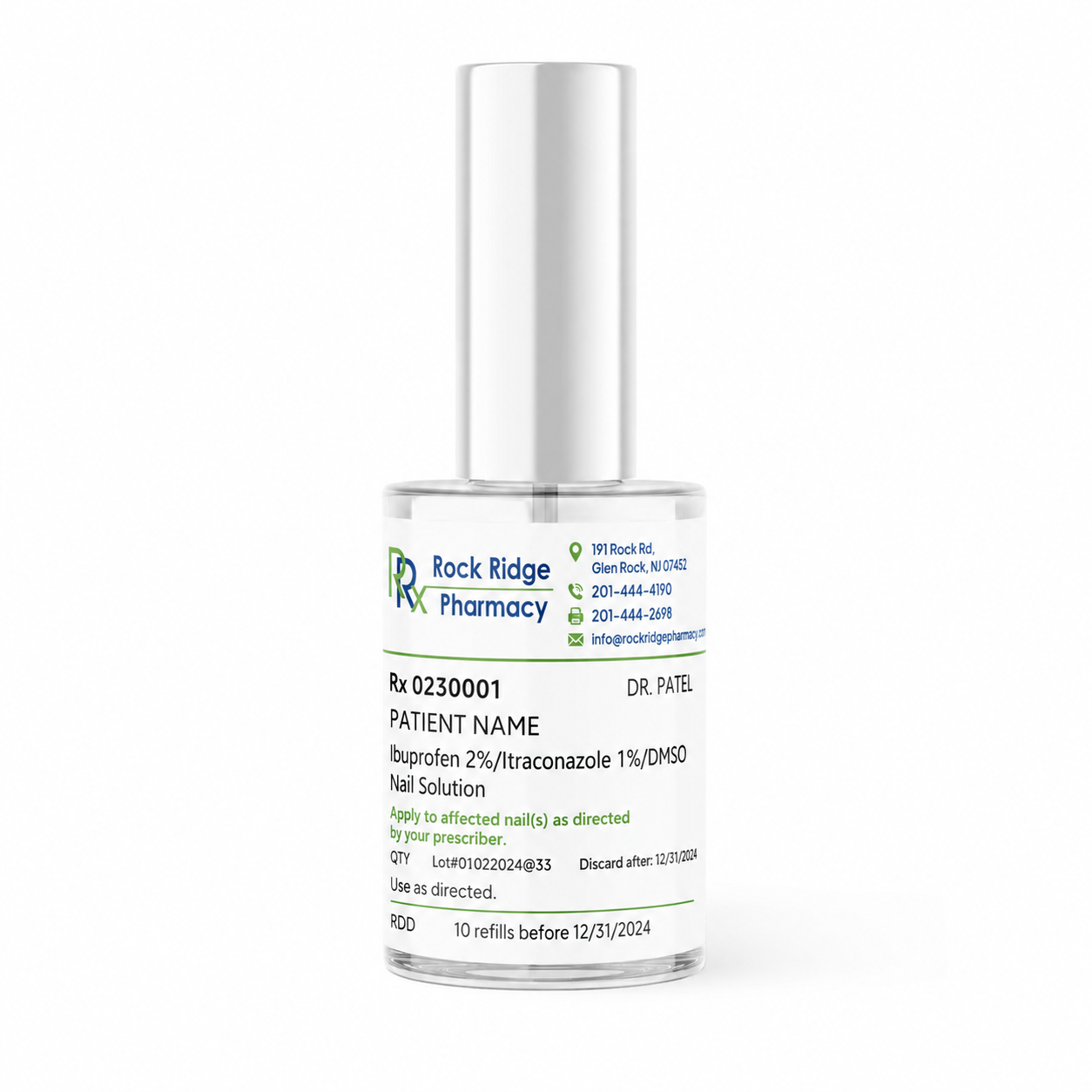
Ibuprofen 2% / Itraconazole 1% / DMSO Nail Solution
A customized nail solution combining prescribed ingredients for localized application to the affected nail.
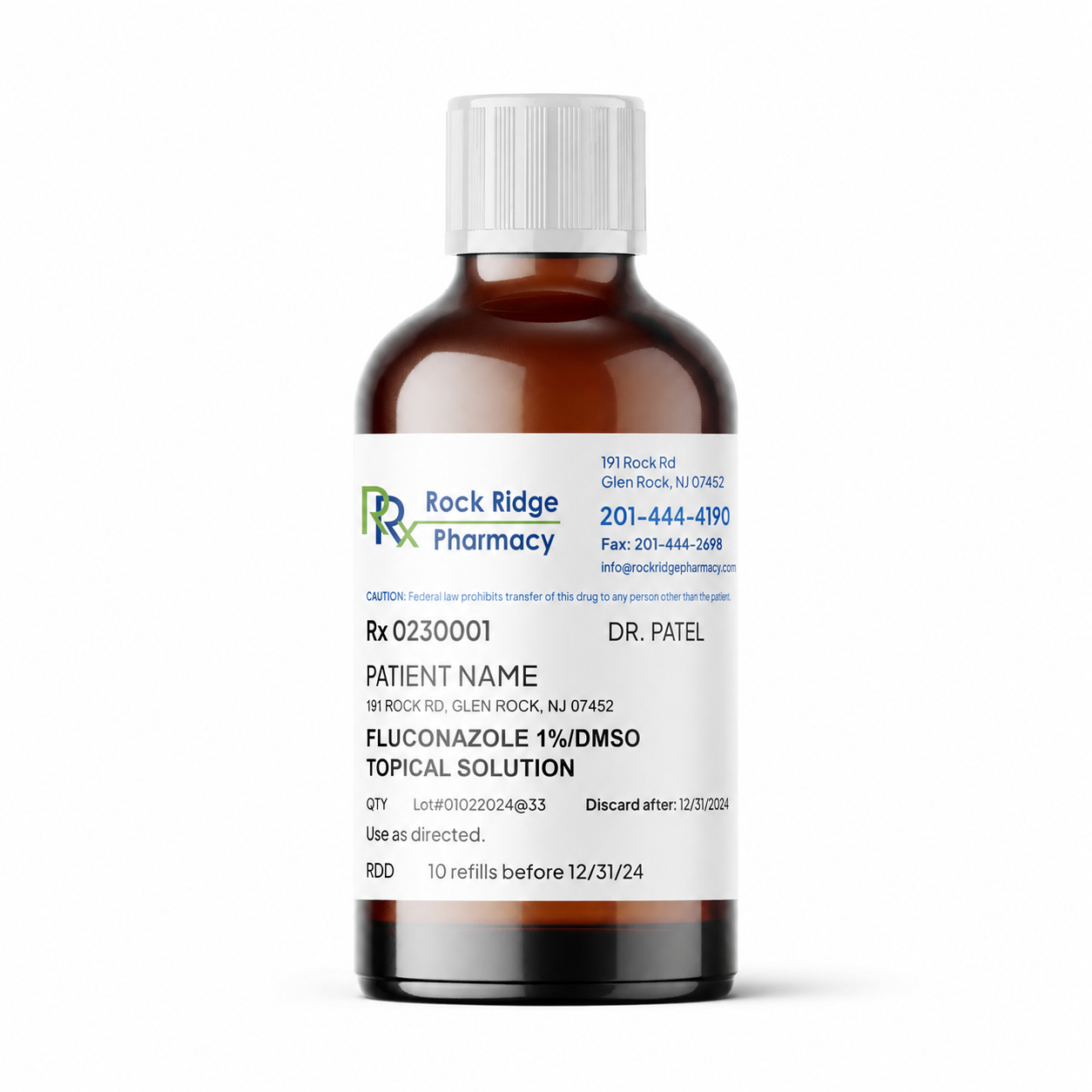
Fluconazole 1% / DMSO Topical Solution
A lightweight compounded solution that may be prescribed for localized application to the nail or surrounding treatment area.
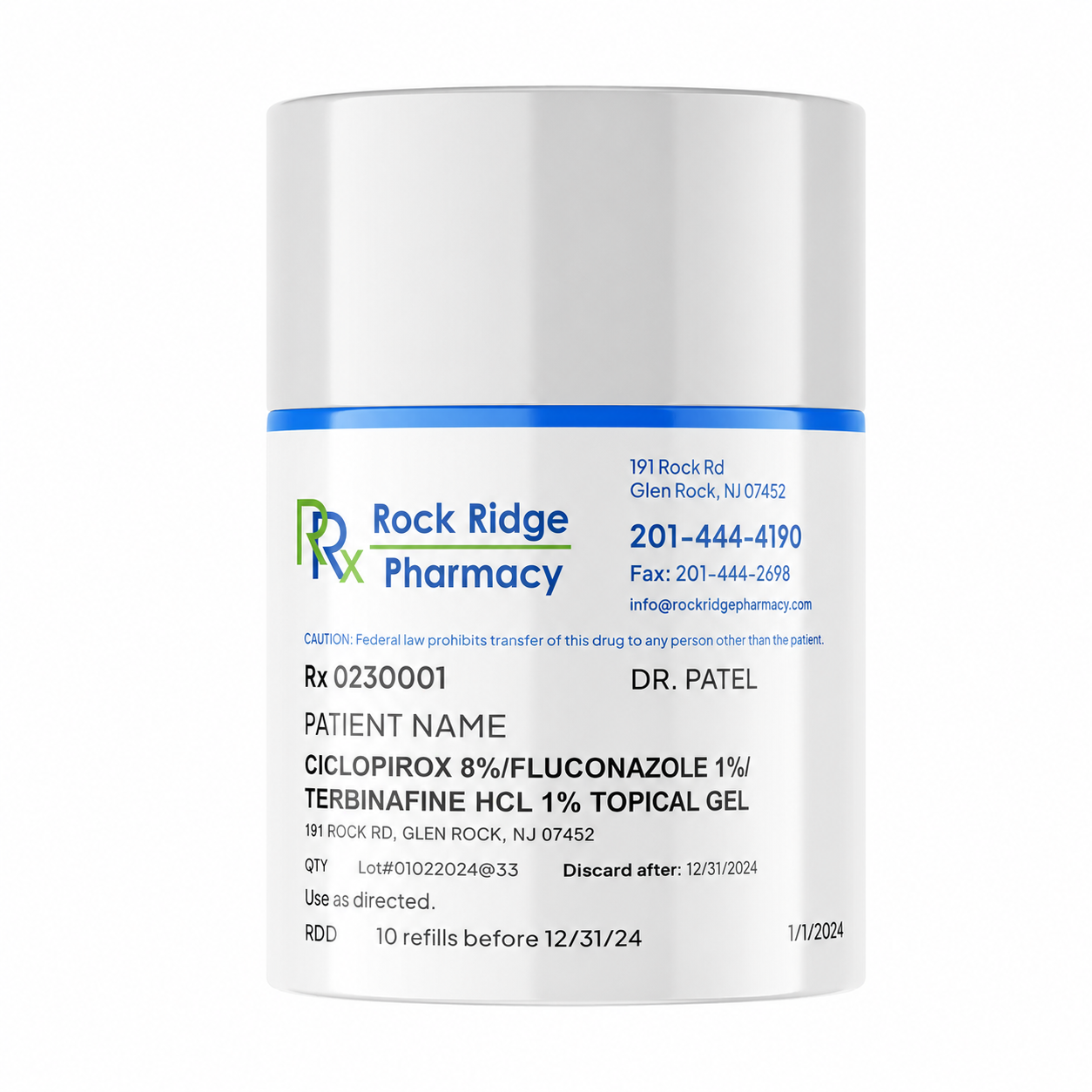
Ciclopirox 8% / Fluconazole 1% / Terbinafine HCl 1% Topical Gel
A multi-ingredient compounded gel that may be prescribed when a customized combination of antifungal ingredients is needed.
Formulation Flexibility
Customized Dosage Forms for Nail Fungus
Compounding allows the podiatrist to specify not only the active ingredients and strengths, but also the dosage form used to deliver the medication. Rock Ridge Pharmacy prepares the form ordered on the prescription.
Nail Solutions
A thin liquid preparation intended for direct, localized application to the nail. Its fluid consistency can allow the preparation to spread across the nail surface and edges as directed.
Topical Solutions
A lightweight liquid dosage form that may be prescribed for localized application to the nail or surrounding treatment area, depending on the formulation.
Topical Gels
A thicker dosage form that can provide more controlled placement on the treatment area and can accommodate prescribed multi-ingredient formulations.
Why Dosage-Form Flexibility Matters
A commercial product may offer only one standard formulation. Compounding gives the prescriber the ability to request a specific dosage form together with the desired ingredient combination and strength, allowing Rock Ridge Pharmacy to prepare a patient-specific prescription.
Treatment Expectations & Cost Considerations
Improvement Takes Time
Toenails grow slowly, so visible changes usually occur gradually as new, healthier-looking nail grows forward. Results are not immediate and timelines vary between patients.
Consistent Use Matters
Use the compounded preparation for the full duration recommended by your prescriber. Skipping applications or stopping early may affect the overall treatment response.
Podiatrist Follow-Up
Follow-up allows the prescriber to evaluate progress and determine whether the formulation, dosage form, or overall treatment plan should remain the same or be adjusted.
Customized Pricing
Cost depends on the ingredients, strengths, dosage form, quantity, and complexity of the compounded prescription. Pricing can vary from one patient-specific formulation to another.
Call (201) 444-4190 for pricingYour podiatrist determines the appropriate treatment plan and duration. Rock Ridge Pharmacy prepares the compounded medication according to that prescription and can answer questions about the formulation, storage, and pharmacy-provided directions.
Storage & Safety
Storing Your Compounded Preparation
- Follow the storage directions on your prescription label.
- Keep the medication in its original, tightly closed container.
- Protect it from excessive heat, moisture, and direct sunlight unless otherwise directed.
- Do not refrigerate or freeze unless specifically instructed by Rock Ridge Pharmacy.
- Follow the pharmacy-provided beyond-use date.
Using Your Medication Safely
Possible reactions depend on the ingredients, strengths, dosage form, and application area. Some topical preparations may cause localized redness, dryness, itching, burning, irritation, or sensitivity.
Use the preparation only as prescribed and contact your podiatrist, healthcare provider, or pharmacist if you experience an unexpected, severe, or persistent reaction.
Your Instructions Are Formulation-Specific
Compounded nail preparations can differ in active ingredients, concentrations, bases, and dosage forms. Rock Ridge Pharmacy provides storage, handling, beyond-use date, and pharmacy-use instructions specific to the prescription prepared for you.
When to Follow Up With Your Podiatrist
Follow the schedule recommended by your podiatrist so they can evaluate your progress and determine whether the compounded formulation, dosage form, or treatment plan should be continued or adjusted.
Contact your podiatrist sooner if the nail condition is worsening, spreading to additional nails, becoming painful, causing surrounding skin changes, or not progressing as expected.
If you have questions about the compounded preparation itself, including storage, beyond-use date, or pharmacy instructions, contact Rock Ridge Pharmacy at (201) 444-4190.
FAQs About Compounded Nail Fungus Treatments
What can Rock Ridge Pharmacy compound for nail fungus?
Rock Ridge Pharmacy can prepare patient-specific nail solutions, topical solutions, and topical gels according to a valid prescription. Examples include Ibuprofen 2% / Itraconazole 1% / DMSO Nail Solution, Fluconazole 1% / DMSO Topical Solution, and Ciclopirox 8% / Fluconazole 1% / Terbinafine HCl 1% Topical Gel.
Why would a podiatrist prescribe a compounded nail fungus medication?
Compounding may be considered when a podiatrist wants a specific ingredient combination, strength, or topical dosage form that is not readily available as a standard manufactured product. The formulation is prepared according to the individual patient's prescription.
What is DMSO and why is it used in some compounded nail solutions?
DMSO, or dimethyl sulfoxide, may be used as a component of certain compounded topical formulations because of its solvent properties and its ability to influence the delivery of other ingredients through biological tissues. Whether DMSO is appropriate, and at what concentration, is determined by the prescriber and compounding pharmacist for the specific formulation.
Does DMSO kill toenail fungus?
DMSO should not be viewed as the primary antifungal medication in these compounded prescriptions. In formulations such as Fluconazole 1% / DMSO or Ibuprofen 2% / Itraconazole 1% / DMSO, the prescribed antifungal ingredient is a separate component of the formulation.
Why combine more than one antifungal ingredient in a compounded preparation?
A prescriber may request a multi-ingredient preparation when an individualized treatment plan calls for more than one prescribed active ingredient in a single topical dosage form. For example, Rock Ridge Pharmacy may prepare Ciclopirox 8% / Fluconazole 1% / Terbinafine HCl 1% Topical Gel when specifically prescribed.
What is ciclopirox and why might it be included in a compounded nail gel?
Ciclopirox is a topical antifungal medication used in the treatment of fungal nail infections. In a compounded prescription, a podiatrist may request ciclopirox in combination with other prescribed antifungal ingredients and a customized topical dosage form.
Why might fluconazole be compounded into a topical nail preparation?
Fluconazole is an antifungal medication. Compounding allows a prescriber to request it in a patient-specific topical formulation, such as a solution or multi-ingredient gel, when that dosage form is appropriate for the treatment plan.
Why might terbinafine be combined with ciclopirox and fluconazole?
If clinically appropriate, a prescriber may request several antifungal ingredients in one customized formulation. Rock Ridge Pharmacy prepares the combination and strengths specifically ordered on the prescription rather than selecting the combination independently.
Does tea tree oil work for toenail fungus?
Tea tree oil is frequently discussed as a home remedy for fungal nail concerns, but research on its effectiveness for onychomycosis remains limited and results are not definitive. It should not be assumed to be equivalent to a prescribed antifungal medication. Speak with your podiatrist before adding tea tree oil or another over-the-counter product to a prescribed treatment plan.
Can tea tree oil be added to a compounded prescription?
A compounded prescription must follow the formulation ordered by the licensed prescriber. Patients should not add tea tree oil, essential oils, or other ingredients to their compounded medication on their own. If a podiatrist wants a particular ingredient included, the prescription should specify the requested formulation.
What is the difference between a nail solution, topical solution, and topical gel?
A nail solution is a fluid preparation intended for localized nail application. A topical solution is also liquid and may be prescribed for application to the nail or specified treatment area. A topical gel has a thicker consistency that can provide a more controlled localized application. The prescriber determines which dosage form is appropriate.
Is a compounded nail fungus treatment stronger than an over-the-counter product?
Compounded medications should not simply be described as "stronger." Their advantage is customization. A prescription can specify particular active ingredients, concentrations, combinations, and dosage forms based on the patient's individualized treatment plan.
What is the best treatment for toenail fungus?
There is no single treatment that is best for every patient. The appropriate approach depends on factors such as the cause of the nail changes, extent of nail involvement, medical history, previous treatment, and the prescriber's clinical assessment. A podiatrist can determine whether a standard or compounded treatment is appropriate.
Why is toenail fungus difficult to treat?
Toenail infections can be challenging because the fungus may involve areas within or beneath the nail plate, and toenails grow slowly. Even when treatment is progressing, visible improvement may take time as healthier-looking nail grows forward.
How long does compounded treatment for toenail fungus take?
Treatment timelines vary. Toenails grow slowly, so changes in appearance generally occur gradually rather than immediately. The duration of treatment depends on the extent of nail involvement, the prescribed formulation, individual nail growth, and response to treatment.
Can nail fungus come back after treatment?
Fungal nail infections can recur in some patients. Your podiatrist can provide guidance on follow-up care and management of factors that may contribute to recurrence. Contact your provider if nail changes return or new nails become affected.
Do I need a prescription for Rock Ridge Pharmacy to compound a nail fungus medication?
Yes. A valid patient-specific prescription from a licensed healthcare provider is required. The prescription determines the ingredients, strengths, dosage form, and directions for use.
Can Rock Ridge Pharmacy work directly with my podiatrist?
Yes. Rock Ridge Pharmacy can communicate with your podiatrist or other licensed prescriber regarding the compounded prescription and formulation requirements. Prescribers may send prescriptions electronically, by fax, or contact the pharmacy directly.
How much does a compounded nail fungus prescription cost?
Pricing depends on the ingredients, strengths, dosage form, quantity, and complexity of the prescribed formulation. Call Rock Ridge Pharmacy at (201) 444-4190 for pricing based on your specific prescription.
How quickly can Rock Ridge Pharmacy prepare a compounded nail prescription?
Preparation time depends on the formulation and ingredient availability. Many compounded prescriptions may be prepared within approximately 24–48 hours when the necessary ingredients are available. Rock Ridge Pharmacy can provide a more specific timeframe after receiving the prescription.